2027 Kawasaki TERYX H2 Test Review
250 Horsepower. Japanese Engineering. The Supercar We’ve Been Waiting For.
Since 2008, the high-performance side-by-side segment has been dominated by Polaris and Can-Am, with Japanese manufacturers playing catch-up. Kawasaki changed that narrative with the supercharged TERYX H2 platform. After launching the four- and five-seat versions last year, they’re now bringing the much-anticipated two-seat model to market.
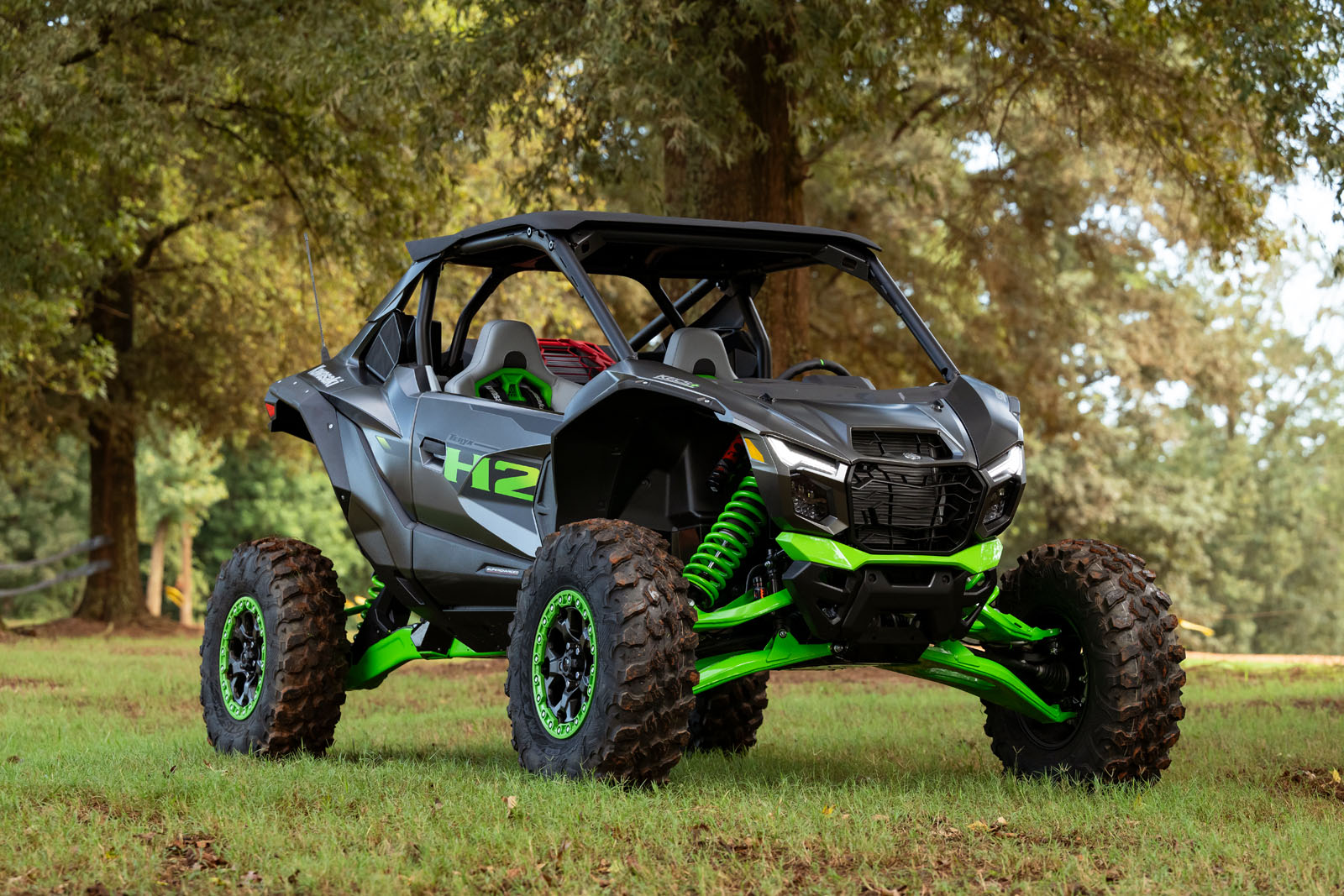
After years of Polaris and Can-Am dominating the high-performance SxS segment, Kawasaki is finally bringing its two-seat supercharged TERYX H2 to the fight, backed by Japanese engineering and the best power-to-weight ratio in the class.
On paper, the supercharged H2 delivers the best power-to-weight ratio in the class. The rest of spec list that reads like one of the top cars on the market. However, the H2 faces an uphill battle of stiff competition in a crowded segment and a challenging economy. Does the longest-awaited sport SXS on the market have what it takes to rise to the top of the space? We’re about to find out.
Trim Packages
Kawasaki offers two versions of the two-seat TERYX H2. The lineup starts with the base TERYX H2 at $32,899 and steps up to the LIMITED eS at $41,399. Both are built in Lincoln, Nebraska, and both are priced thousands of dollars below the comparable top trims from Can-Am and Polaris.
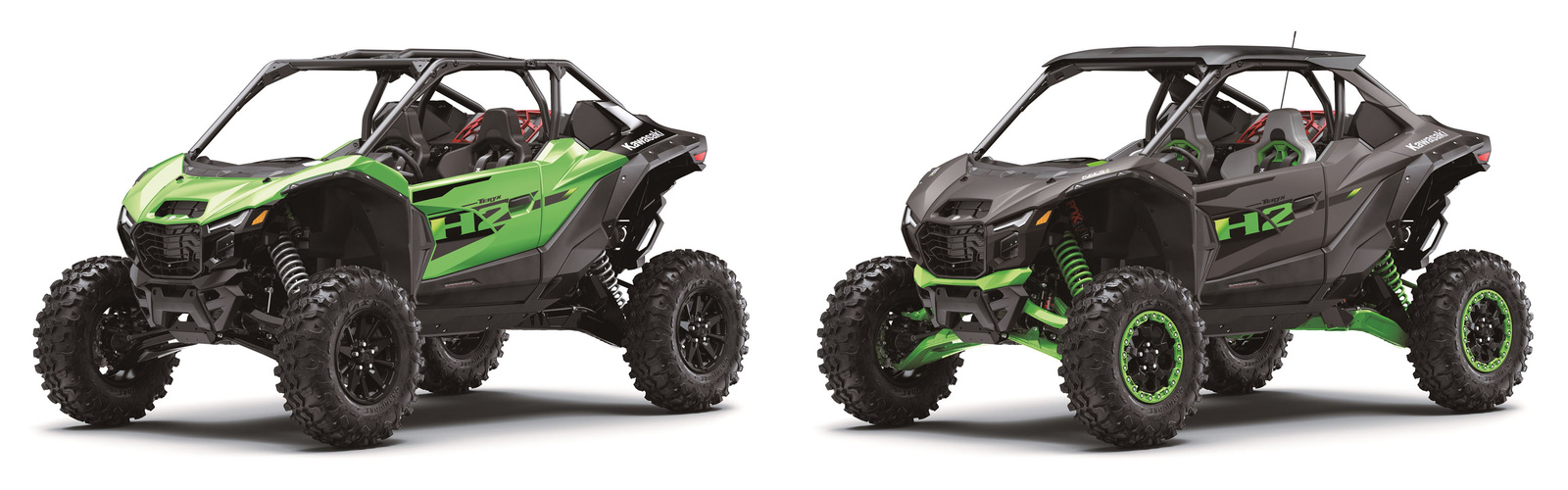
The two-seat TERYX H2 starts at $32,899, while the $41,399 LIMITED eS adds electronically controlled FOX Live Valve suspension, a 10-inch Garmin Tread, roof, and 16-inch beadlock wheels.
The base TERYX H2 shares the same 250-horsepower supercharged engine, chassis, and core performance specifications as the higher model.
We tested the top-of-the-line TERYX H2 LIMITED eS. It adds Kawasaki Electronic Control Suspension + E-Sway Bar (KECS+) with FOX 3.0 Live Valve Internal Bypass shocks, a 10-inch Garmin Tread off-road navigation system with integrated audio, a plastic roof, and additional premium features including 16-inch aluminum beadlock wheels.
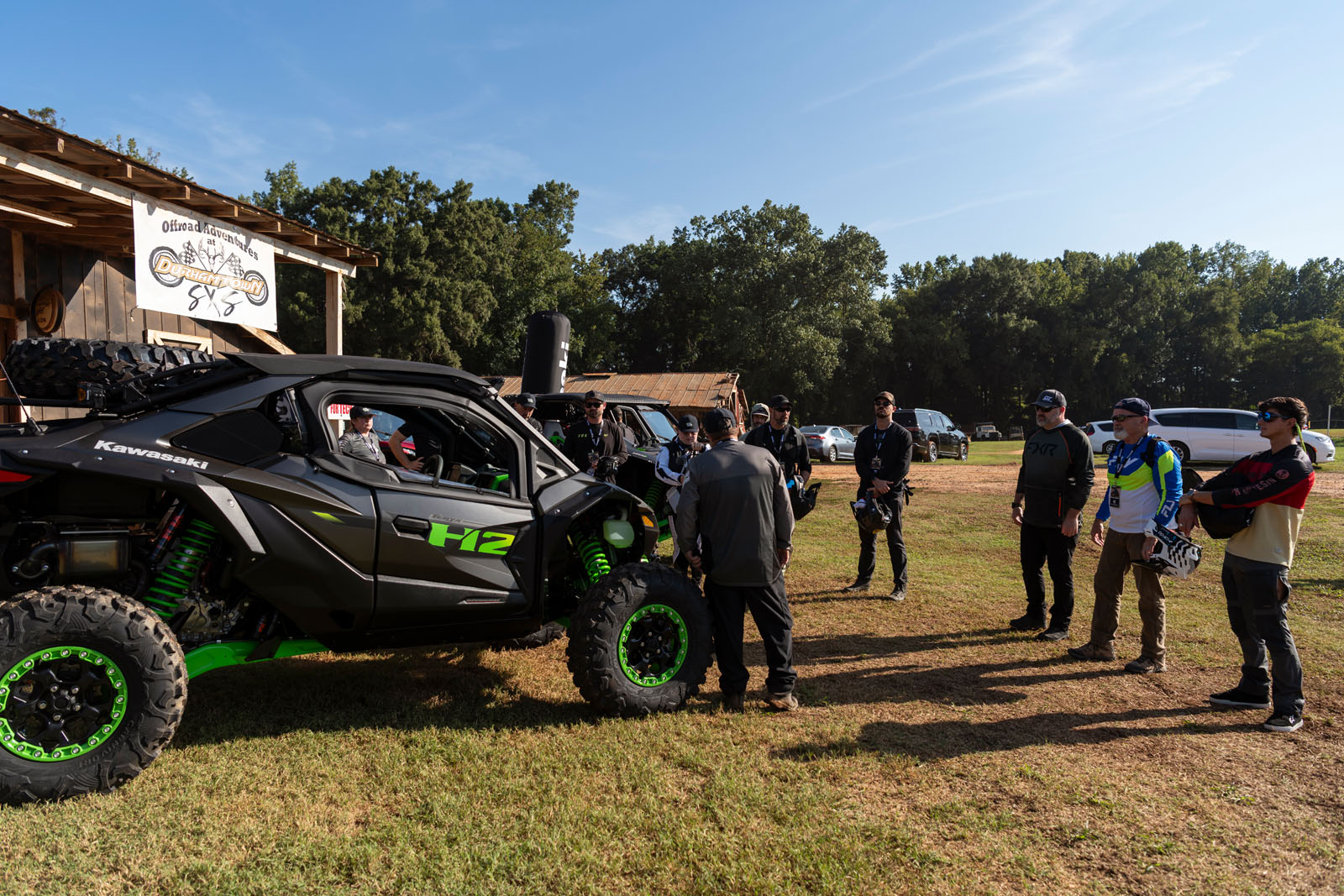
Durhamtown features over 5,000 acres of trails and tracks open to side-by-sides. Our testing covered both the trail loop and Durhamtown’s Turbo Track.
Driver and Location
Testing for the Kawasaki TERYX H2. took place at Durhamtown in Union Point, Georgia. Learn more about Durhamtown and all they have to offer at Durhamtown.com. The park features over 5,000 acres of trails and tracks open to side-by-sides. Our testing covered both a well-rounded trail loop and Durhamtown’s Turbo Track, short course track.
While not all of Durhamtown’s trails are wide enough for today’s high-horsepower supercars, the loop we rode offered plenty of width for the H2. It featured a mix of tight to intermediate-speed terrain, with abundant water breaks for hopping through the woods, plus flatter sections and plenty of turns to evaluate performance. The Turbo Track short course gave us room to let the H2 stretch out through the turns and down the straights. Jump faces were long with mellow transitions that lofted the machine into the air, including hucks to flat, uphill jumps, and fall-away leaps that offered some hang time. We tested all of the H2’s various settings in both environments.
Our driver, Ed Teixeira, is the owner of Teixeira Tech Chassis Components. The company already offers a full line of chassis and suspension upgrades for the new two-seat, four-seat, and five-seat Kawasaki H2 models. Learn more about Teixeira Tech at TeixeiraTech.com.
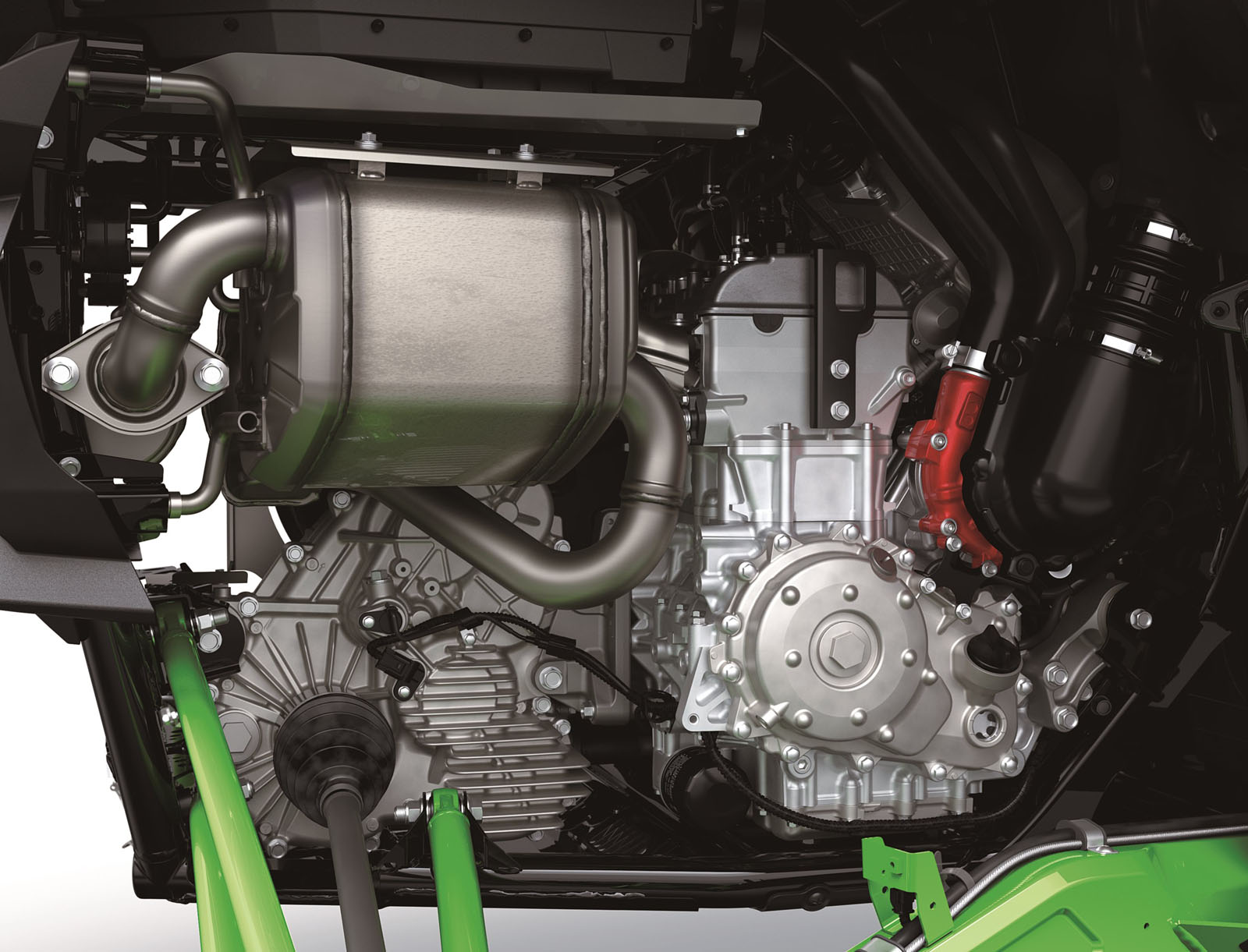
The TERYX H2 LIMITED eS is powered by a 999cc liquid-cooled, supercharged 16-valve DOHC inline-four producing 250 horsepower at 9,000 rpm.
Engine Performance
The TERYX H2 LIMITED eS is powered by a 999cc liquid-cooled supercharged, 16-valve, DOHC, inline-four. Unlike the turbocharged engines in the Can-Am Maverick R and Polaris RZR Pro R Boost, the H2 uses a mechanically driven centrifugal supercharger. This design was chosen to provide immediate boost without the lag associated with exhaust-driven turbochargers.
The engine produces 250 horsepower at 9,000 rpm. With an estimated dry weight of 2,165.3 pounds, the TERYX H2 LIMITED eS achieves a class-leading power-to-weight ratio of 0.1155 horsepower per pound. For full comparable specs with on the Maverick R X RS with Smart-Shox and the RZR Pro R Boost Ultra, see the comparison table below.
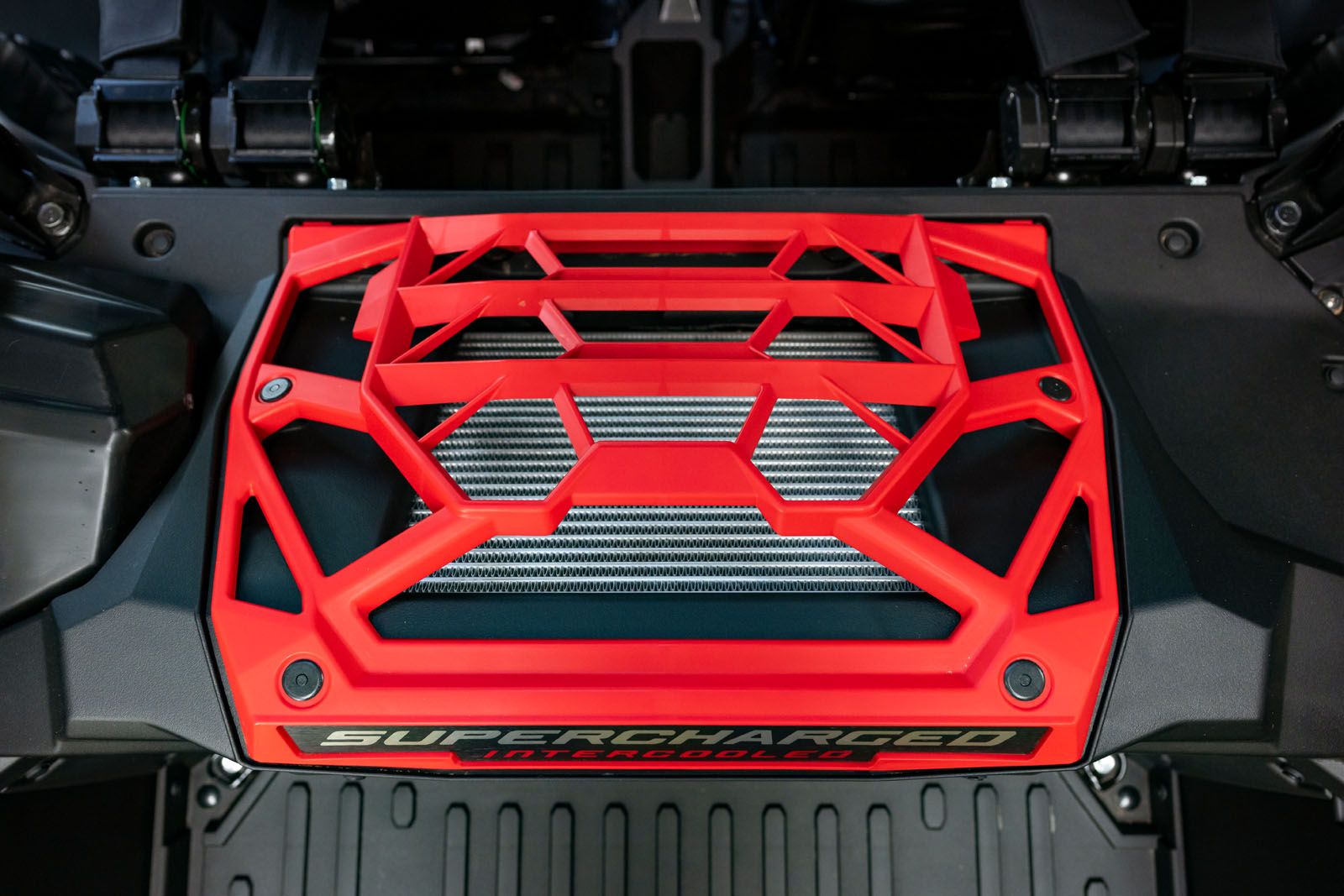
The TERYX H2’s centrifugal supercharger spins its impeller at up to 130,000 rpm, while an intercooler and dedicated cooling fan help manage intake temperatures.
The H2’s supercharger spins the impeller at up to 130,000 rpm, with an intercooler and dedicated cooling fan to manage intake temperatures. Tandem radiators under the front hood handle engine cooling.
The TERYX H2 LIMITED eS uses dual high-mounted snorkel air intakes, one for the supercharged engine and one for the CVT. The snorkels are recessed and positioned via CFD to help dust blow past the openings. The engine airbox with its Donaldson filter sits on the passenger side, rear of the cab. The CVT has a dedicated intake snorkel and a separate exhaust vent.
Fuel delivery comes from four individual 40mm throttle bodies with dual injector sets. Downstream 12-hole injectors handle low-rpm fueling, while upstream 10-hole injectors activate above 5,000 rpm to support high-rpm power.
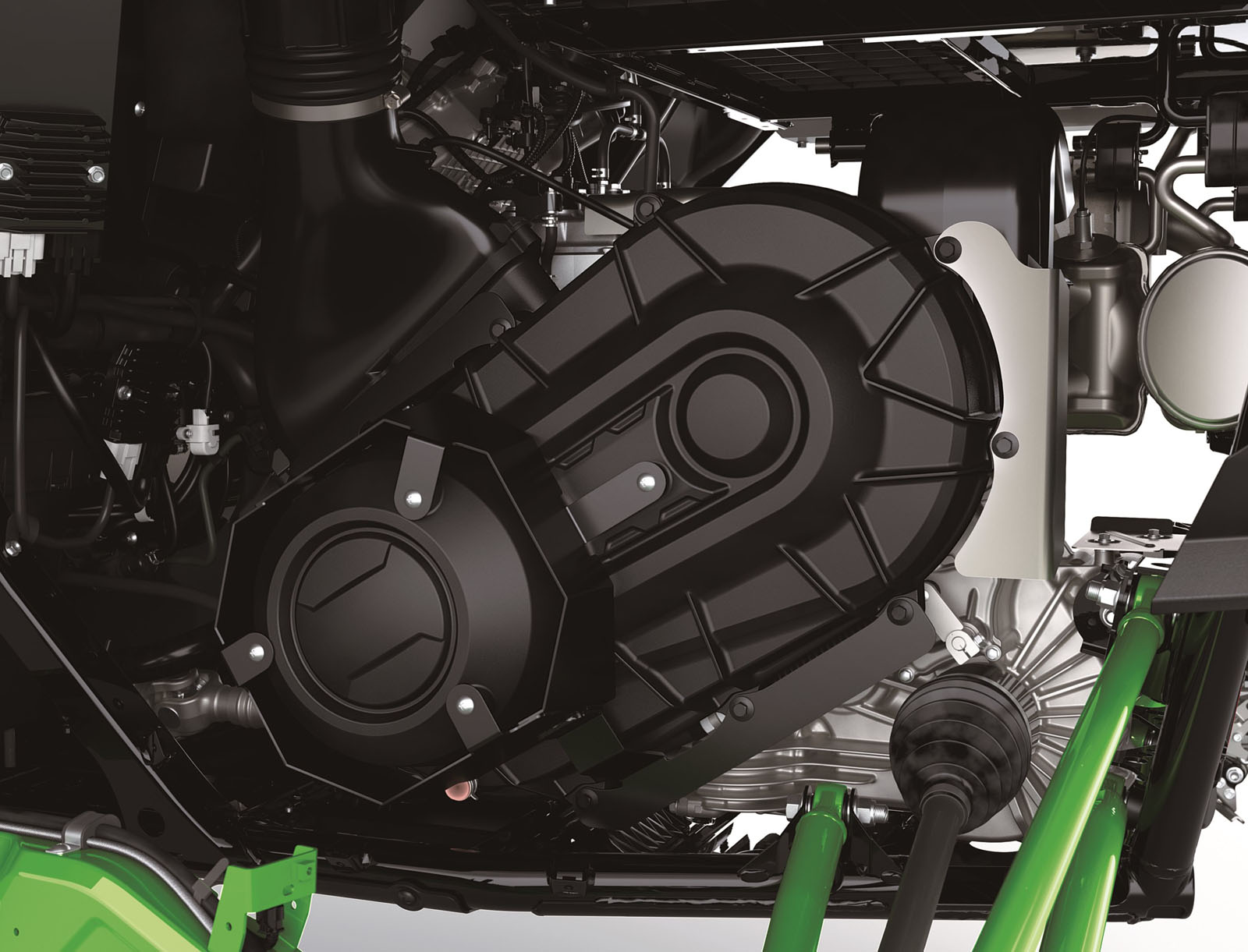
The TERYX H2 uses a CVT to transfer power to the wheels, with increased cooling airflow, engine braking, and High, Low, Neutral, and Reverse ranges.
A CVT transfers power to the wheels, with cooling airflow double that of the TERYX KRX 1000. It also provides engine braking. A gate-style shift lever allows drivers to select between High, Low, Neutral, and Reverse. The transmission does not include a Park position, so the parking brake lever between the seats is used to secure the vehicle when stopped.
The TERYX H2 LIMITED eS features an on-the-fly electrically selectable 2WD/4WD system with a locking front differential operated via a dashboard-mounted switch. Kawasaki adds KTRC traction control to help manage the TERYX H2’s power. It works only in 2WD and offers two selectable modes or can be turned off. Mode 1 reduces power to 55% during intervention, while Mode 2 limits it to 30%, letting drivers choose the level of assistance based on skill or conditions.
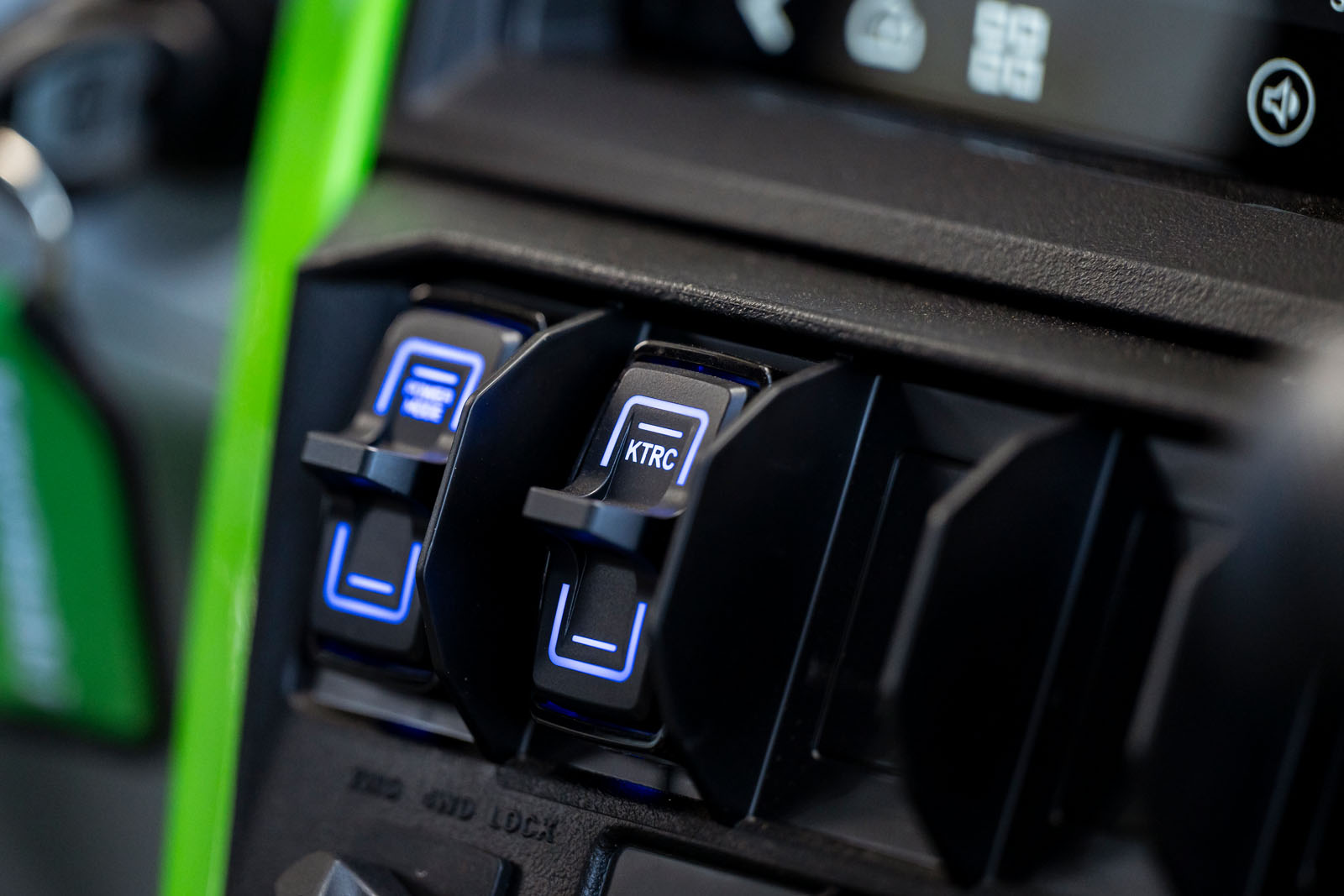
The TERYX H2 offers Full, Mid, and Low power modes selectable on the fly, with Mid reducing output to about 80% and Low to roughly 60% for added control in casual or technical terrain.
Drivers can also select between Full, Mid, and Low power modes on the fly in any drive configuration. Full Power mode delivers the engine’s complete output. Mid Power mode reduces output to about 80% of full for enhanced control during casual cruising. Low Power mode drops it to roughly 60% of full for loading or technical terrain.
Turn the key and the H2 takes a few RPMs to fire, then runs smoothly with a deep muscular tone. Shifting into gear and through the drive selections was smooth, even on a mild incline.
Put the transmission in drive and gently press the easy-to-modulate gas pedal, and the CVT engages seamlessly, providing gentle, predictable acceleration. Stomp the gas and the H2 roasts all four tires for quite a distance. The engine is amazingly responsive to throttle input throughout the RPM range. Low-end power is strong with no hint of lag, thanks to the oxygen-engulfing supercharger. Power builds as smoothly and progressively as you control your foot. It pulls through the incredible midrange, never running out of power on top end. On the longest straightaway on the track, we ran out of room long before the H2 ran out of power or top speed.
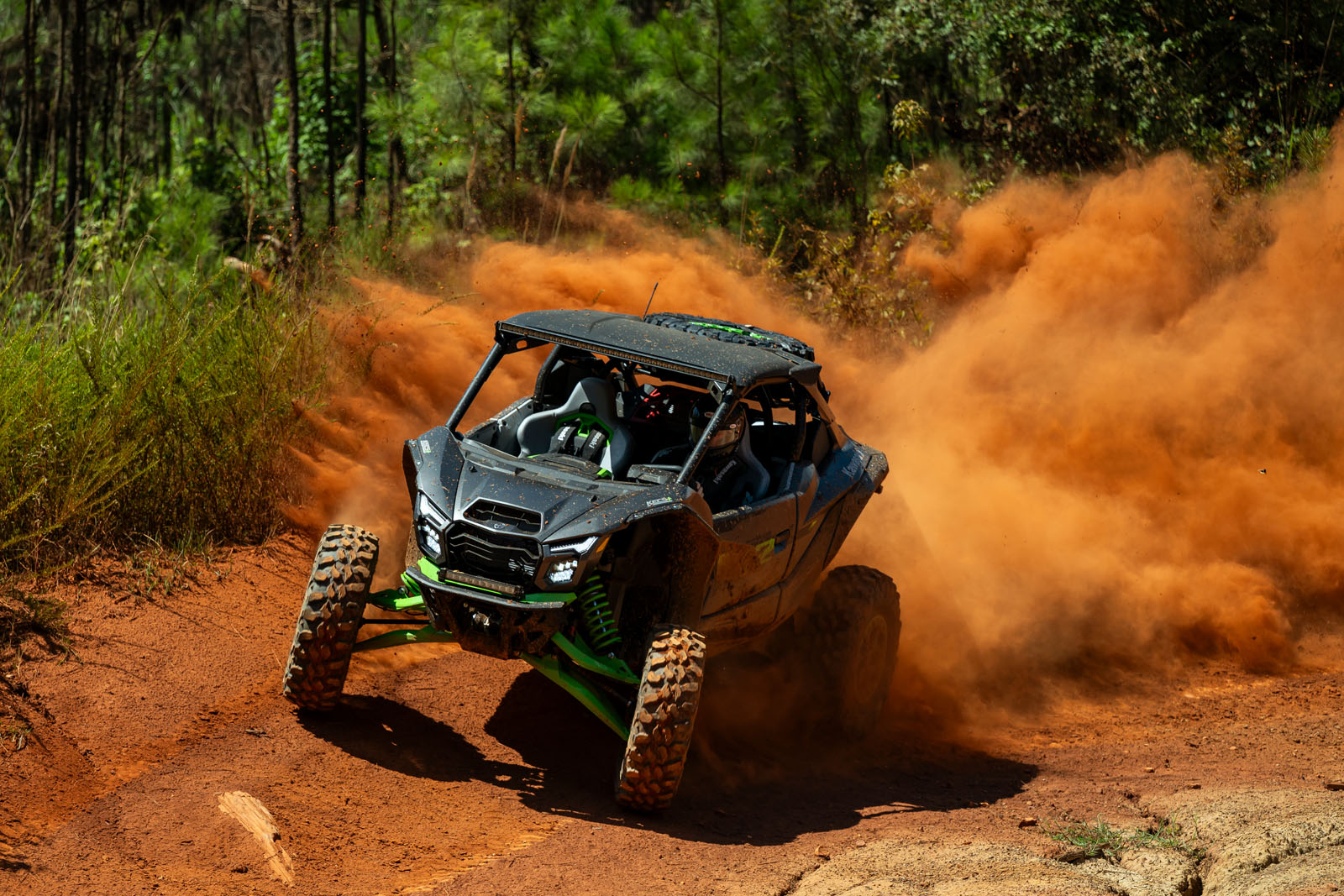
With 250 horsepower on tap, the TERYX H2 delivers brutal acceleration, immediate throttle response, strong low-end pull, and a smooth rush of power that keeps building through the midrange and top end.
Not for the beginner driver or faint of heart, stomp the gas and even a highly experienced driver will be left mind-blown. It’s as scary fast as you dream it to be. The throttle response made it easy to steer with the back end. It also made it easier to maintain a nice level flight off jumps, even shorter water break jumps on the trail that you’d expect to make the rear end kick. Throttle makes a big difference in flight pattern on the H2.
The CVT seemed to in no way hamper engine performance. Smooth off idle, and incredibly responsive to throttle inputs. It never left us wishing for faster response. Chop the throttle and engine braking is smooth in high range. This is beneficial in setting the car up for corners and not loading up the suspension in braking bumps. Driveline chatter under deceleration is minimal.
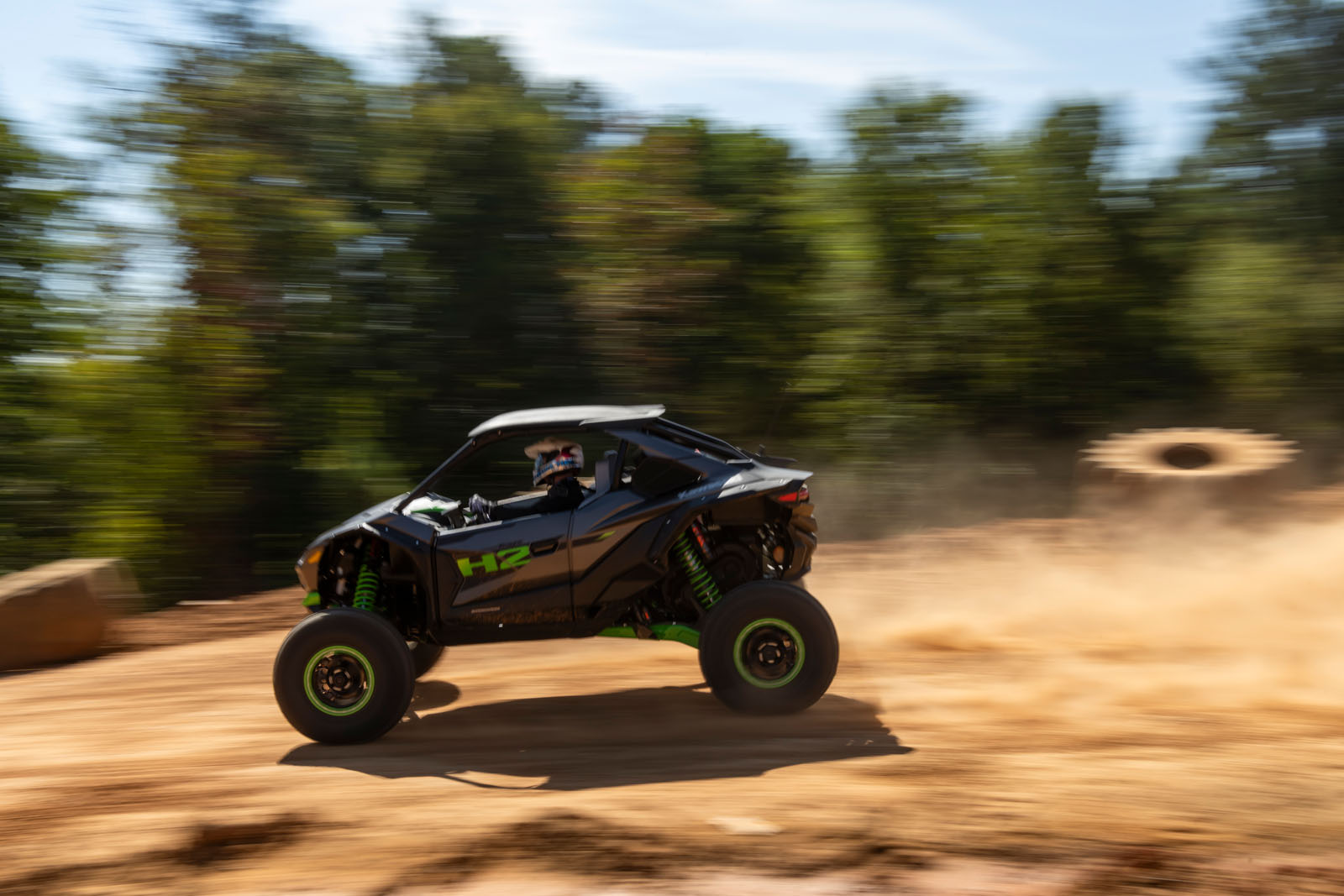
The H2’s CVT proved smooth off idle and highly responsive to throttle inputs, with smooth engine braking in high range and minimal driveline chatter under deceleration.
2WD is there if you want to get sideways. Traction control was effective in reducing or eliminating unwanted slides, but with 4WD and different power modes available, we don’t understand the need for it. 4WD was our drivetrain mode of choice for handling and harnessing the power. We never needed front differential lock during our testing, but we know it works just fine from the 4 and 5 seat models.
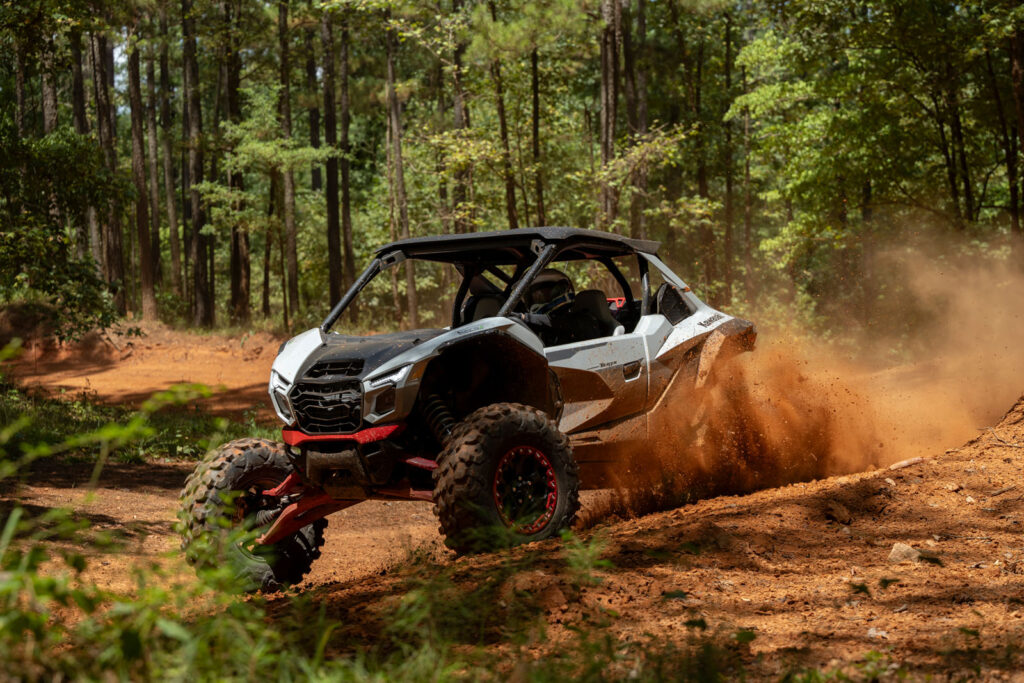
Four-wheel drive was our preferred drivetrain setting for handling and putting the H2’s power to the ground, while the locking front differential was never needed during our testing.
Engine wise, the Kawasaki Teryx H2 delivers the mind-numbing acceleration HP freaks demand, while its different throttle modes make the power more manageable for technical terrain or letting less experienced drivers take a spin with less chance of them getting in over their heads due to the confidence the H2 delivers. Overall engine performance is awesome.
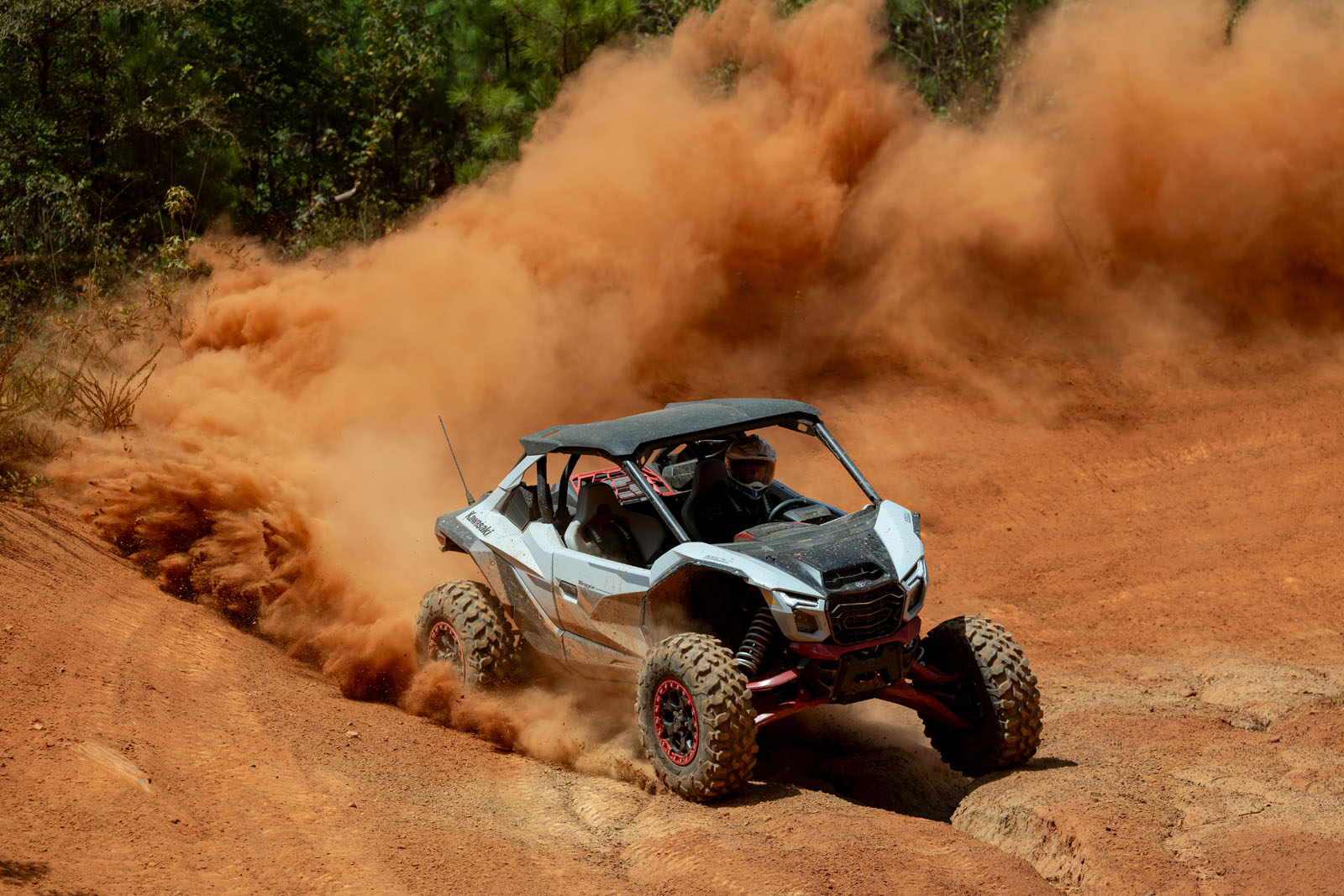
Overall, the H2’s supercharged engine is an absolute riot, with explosive acceleration and selectable power modes that help tame the madness when the trail gets tight or technical.
Chassis, Suspension & Handling
The TERYX H2 LIMITED eS rides on a purpose-built compact chassis with a 101-inch wheelbase, shorter than both the 110-inch Maverick R and the 104.5-inch RZR Pro R Boost. This shorter wheelbase was designed to help balance performance in tighter terrain. Overall width is 74 inches, narrower than the 78.1-inch Maverick R. Ground clearance is 16.1 inches. At 134.1 inches long, it is the shortest of the three machines. Overall height is 73.4 inches, placing it between the lower Can-Am and the taller Polaris.
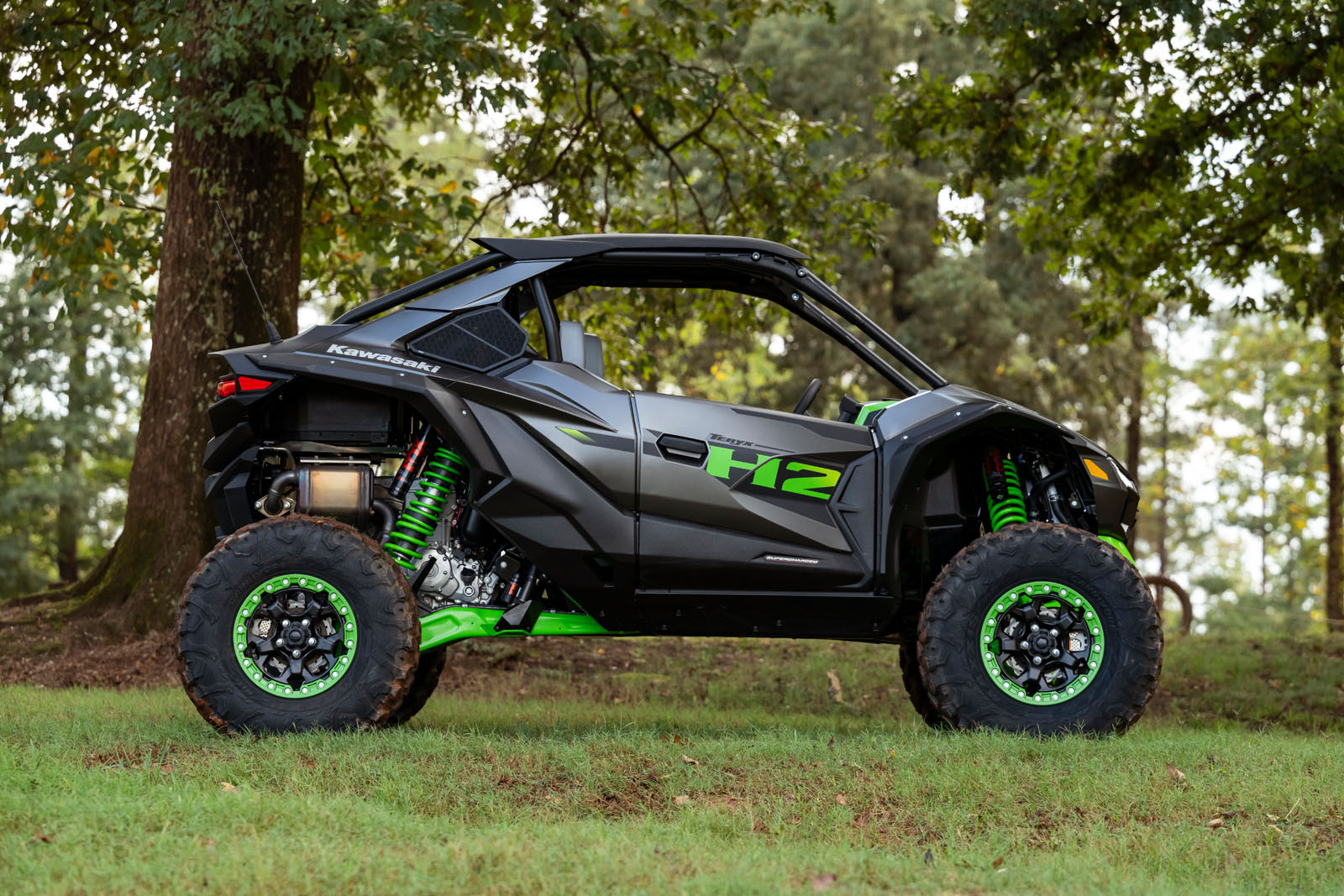
The two-seat TERYX H2 rides on a purpose-built compact chassis with a 101-inch wheelbase and 74-inch width, giving it a smaller footprint than its main rivals and helping it work especially well in tighter terrain.
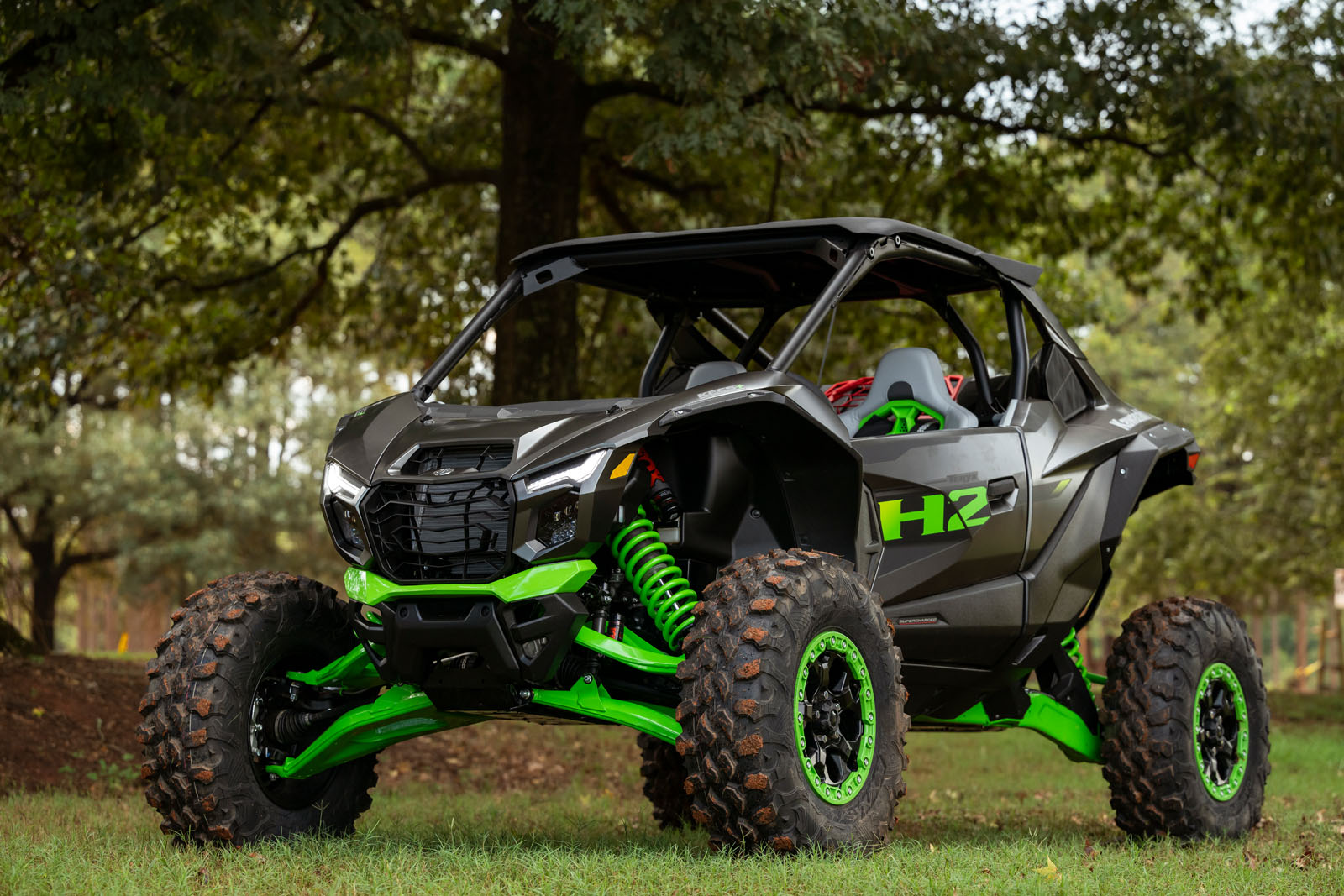
Up front, the TERYX H2 uses double A-arm suspension with long upper and lower A-arms. Out back, it uses a 4-link trailing-arm suspension. Front suspension travel measures 23.2 inches, with 24.0 inches of travel at the rear, placing it among the class leaders.
Up front, the TERYX H2 uses double A-arm suspension with long upper and lower A-arms. Out back, it uses a 4-link trailing-arm suspension. Front suspension travel measures 23.2 inches, with 24.0 inches of travel at the rear, placing it among the class leaders.
Heavy-duty steel skid plates with drain holes protect the underside. Additional steel guards cover important components, and steel plating behind the front fenders helps deflect rocks and debris.
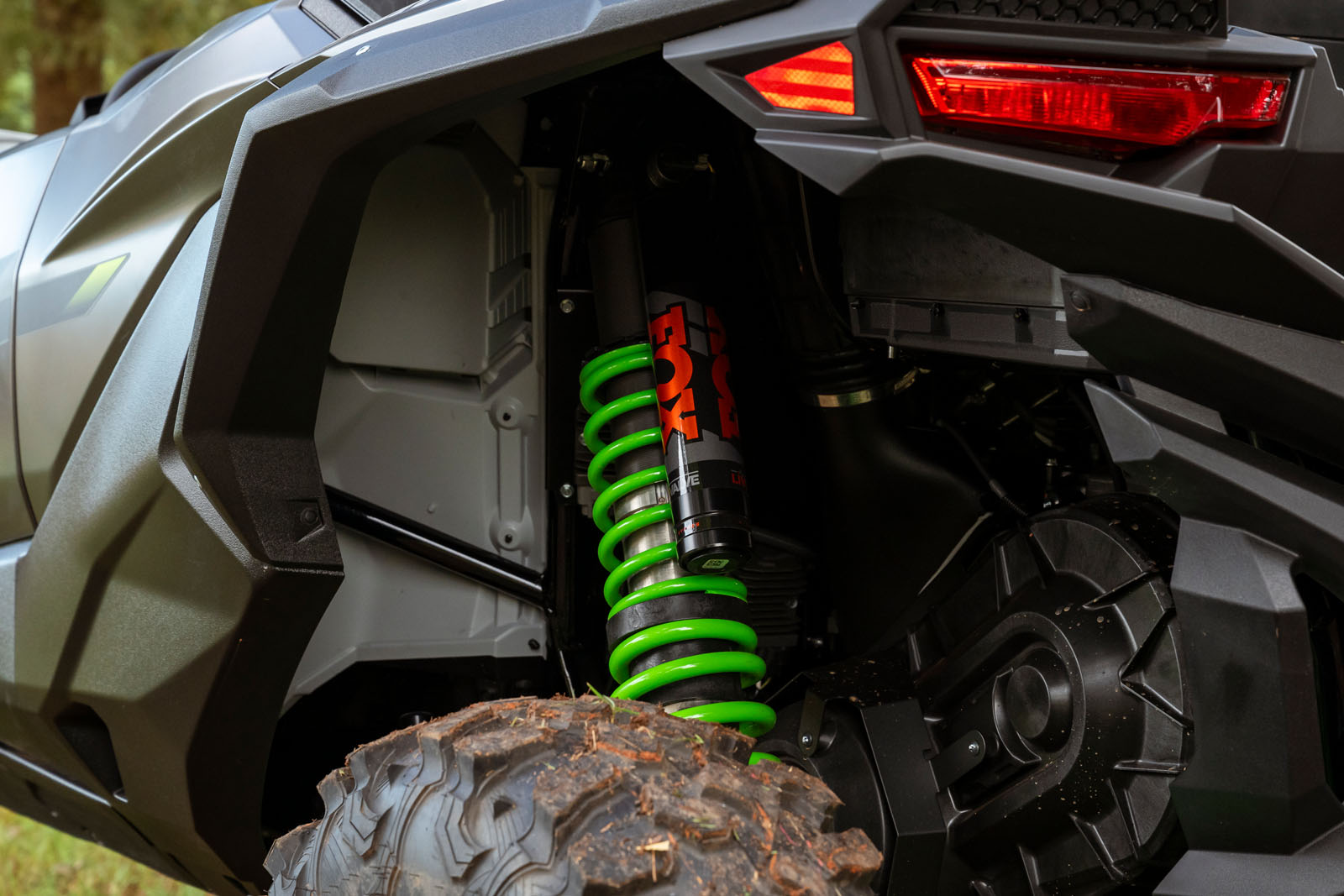
The LIMITED eS uses FOX 3.0 Live Valve Internal Bypass shocks managed by Kawasaki’s electronically controlled suspension system, with Firm, Sport, and Comfort modes selectable on the fly.
The LIMITED eS is equipped with FOX 3.0 Live Valve Internal Bypass shocks managed by Kawasaki Electronic Control Suspension, or KECS+. This system uses acceleration sensors on the suspension arms for faster terrain response, along with IMU-enhanced chassis orientation awareness and additional driver inputs. A FOX Live Valve electronic sway bar disconnect works in coordination with the shocks, continuously adjusting roll resistance in real time based on the selected mode, driver inputs, vehicle speed, gear selection, suspension movement, and IMU data. Drivers can choose between Firm, Sport, and Comfort suspension modes on the fly.
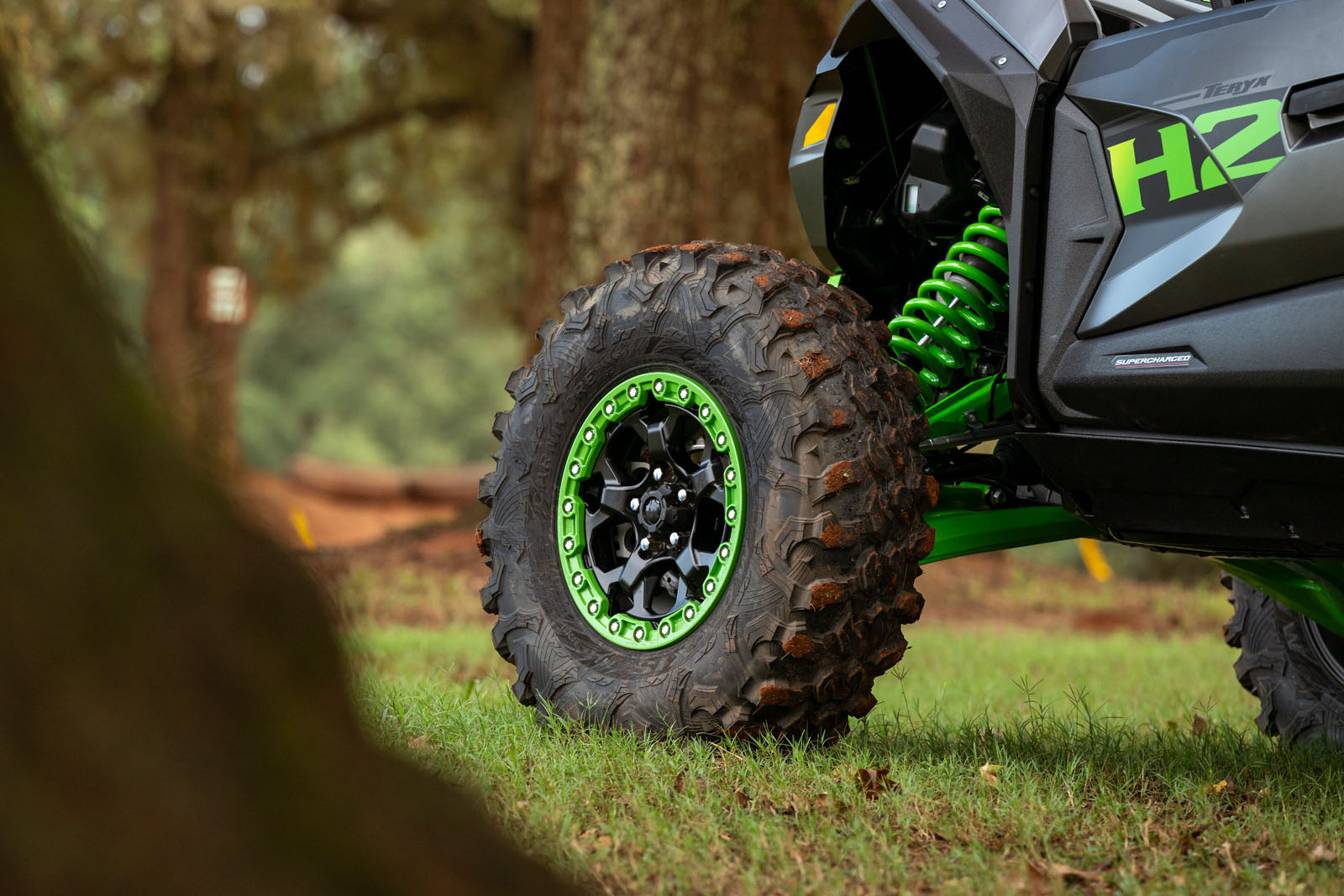
The TERYX H2 LIMITED eS rides on 33-inch Maxxis Carnivore Plus tires mounted to 16-inch aluminum beadlock wheels.
The TERYX H2 LIMITED eS rolls on 33-inch Maxxis Carnivore Plus tires mounted to 16-inch aluminum beadlock wheels. Electric power steering provides variable assistance that is strongest at low speeds.
Overall, quality of construction appears very good throughout. While the Teryx KRX chassis is impressive, tab mounts on the H2 appear very similar in scale and thickness to the much lower horsepower Teryx KRX. Time will tell if that’s adequate on the much higher horsepower H2.
Suspension and handling are both extremely impressive, but like the other supercars on the market, we feel it would get even better with some fine tuning of the shocks preload to lower the car’s ride height a bit. Don’t get it twisted, we’re not saying handling and suspension aren’t incredible, we’re just saying there’s room to improve handling even further if you value a low center of gravity over max ground clearance.
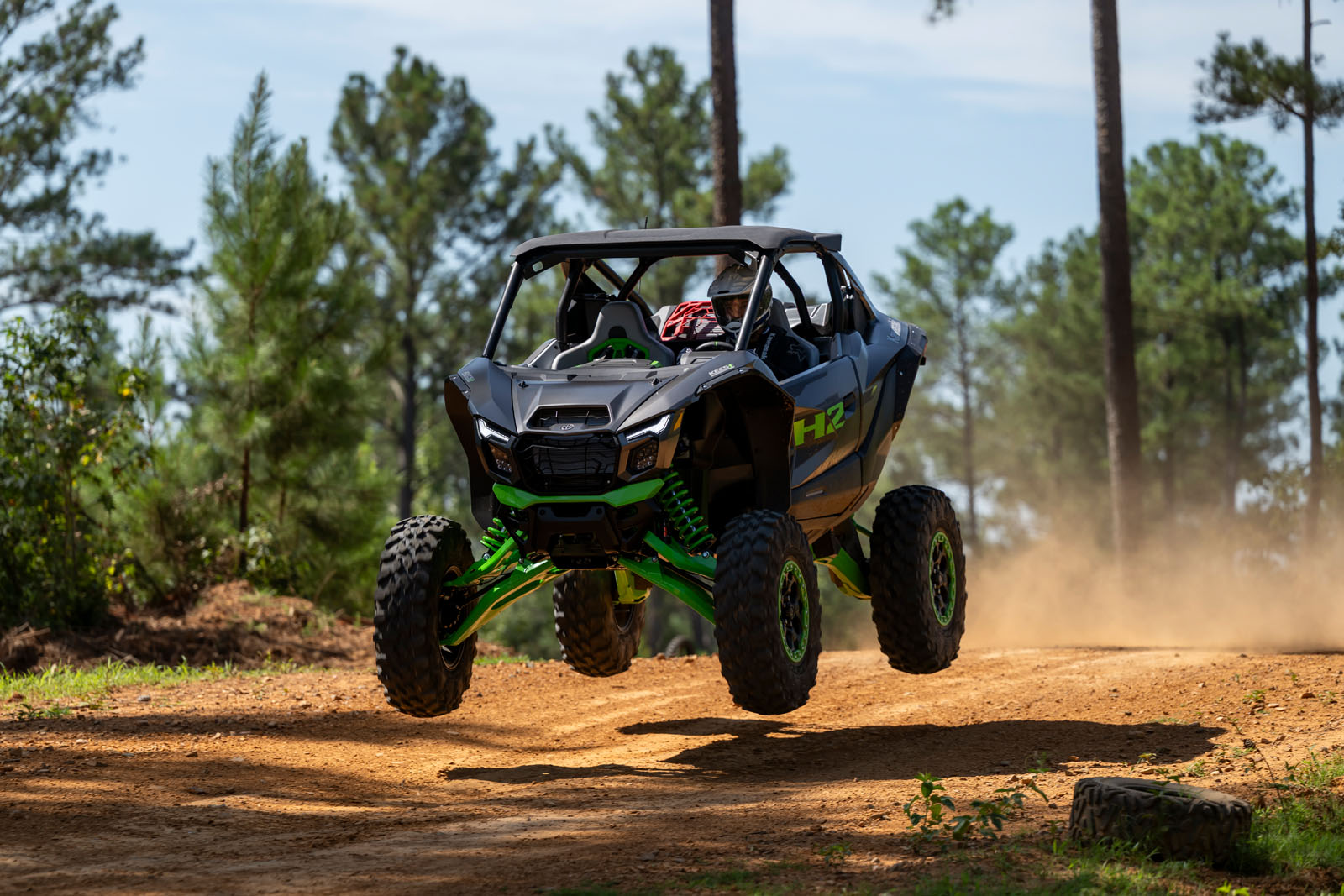
On Durhamtown’s Turbo Track, Firm mode provided the best cornering support while the suspension still landed smoothly off jumps without bottoming. The H2 also proved to be a predictable flyer, staying straight and level off longer jump faces and responding well to throttle in the air.
On the short course, Firm was clearly the best of the three selectable shock and sway bar modes because it reduced body roll in the corners. Even then, the car still landed smoothly off jumps and never bottomed out.
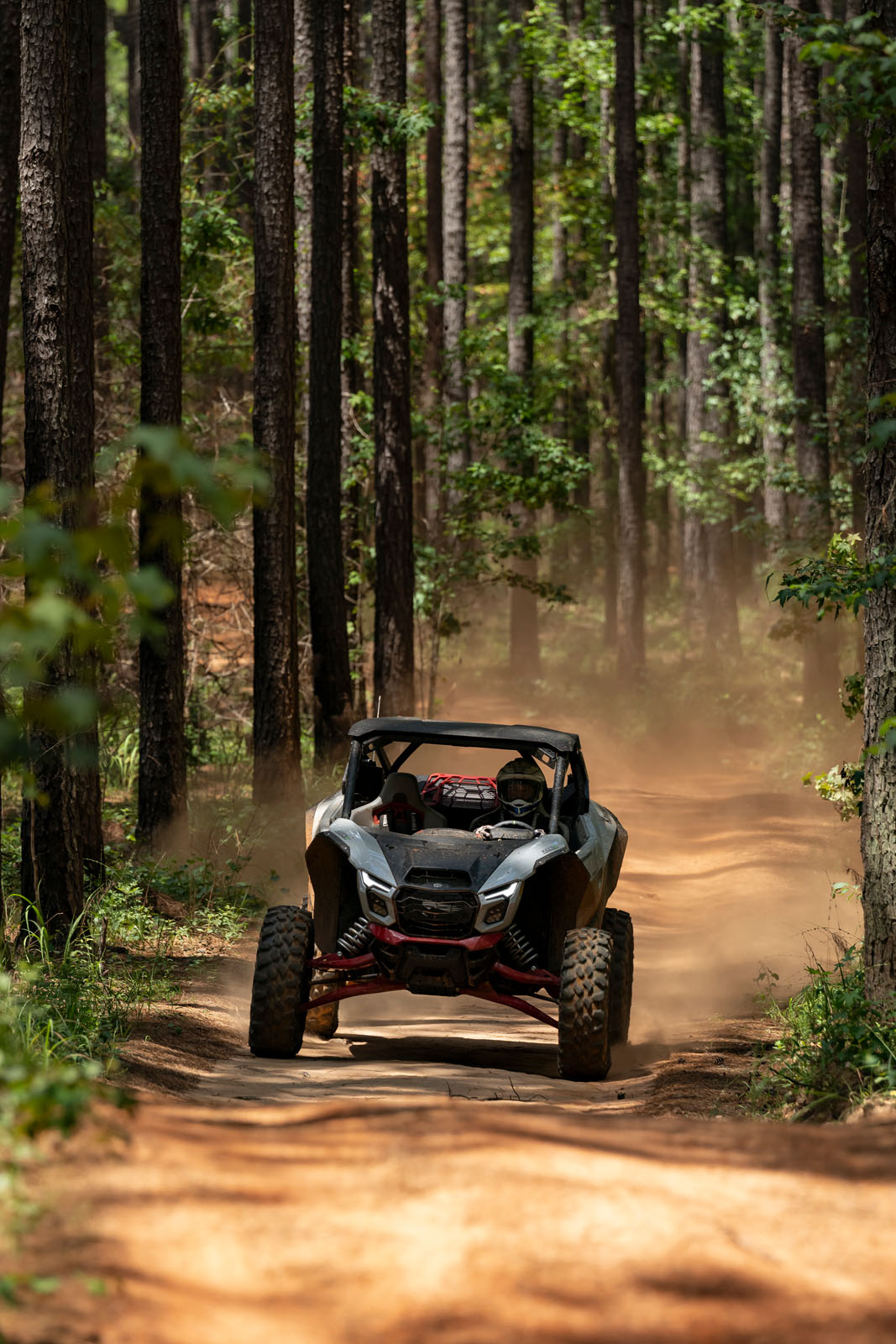
In the woods, Sport mode delivered the best balance of comfort and control, while Firm was preferred when the pace picked up. Ed felt lowering the car slightly with shock preload would let him take better advantage of the softer Sport setting without giving up as much cornering performance.
vA predictable flyer, the H2 flies straight and level off of long ramp faces with a steady throttle, and can carry the front end off shorter ramp faces with the combo of the engine and well balanced weight distribution. If you let off the gas too soon and land nose heavy, or manage to get a little off kilter, the suspension and chassis are well equipped to deal with it.
In the woods, Ed spent his time swapping between sport mode, for comfort, and firm, when he wanted to push the pace. Ed felt lowering the car would have let him enjoy the softer ride of sport mode more often, without as noticeable penalty in the corners. Comfort mode is relegated to rock crawling with stock shock preload.
Don’t get us wrong, the ride isn’t harsh or unforgiving, but if you want it all, it will take a little dialing in like the competition.
The one update Ed mentioned he’d like to see is the ability to select shock and sway bar linkage settings separately. Allowing for setups like softer shock settings for chop, with firmer sway bar settings for cornering. We’re stoked on the shocks and know it’s only going to get better with a little setup.
Teryx H2 balances its insane power with predictable grip at both ends. Steering is best in four-wheel-drive remaining pretty predictable in two.
Power steering assist and filtration of low speed feedback are both very good. Ed did notice some high speed impacts transferred back through the steering from ruts or square edged chop in turns.
Lateral stability for corners, off-cambers, and side hills is rock solid with more to be had as we mentioned.
We remained super confident in the suspension and chassis at the highest speeds we reached, but we never reached top speed, and the terrain in Georgia was far less whooped out than the terrain we’ve tested the competition in. So, there’s more to be explored.
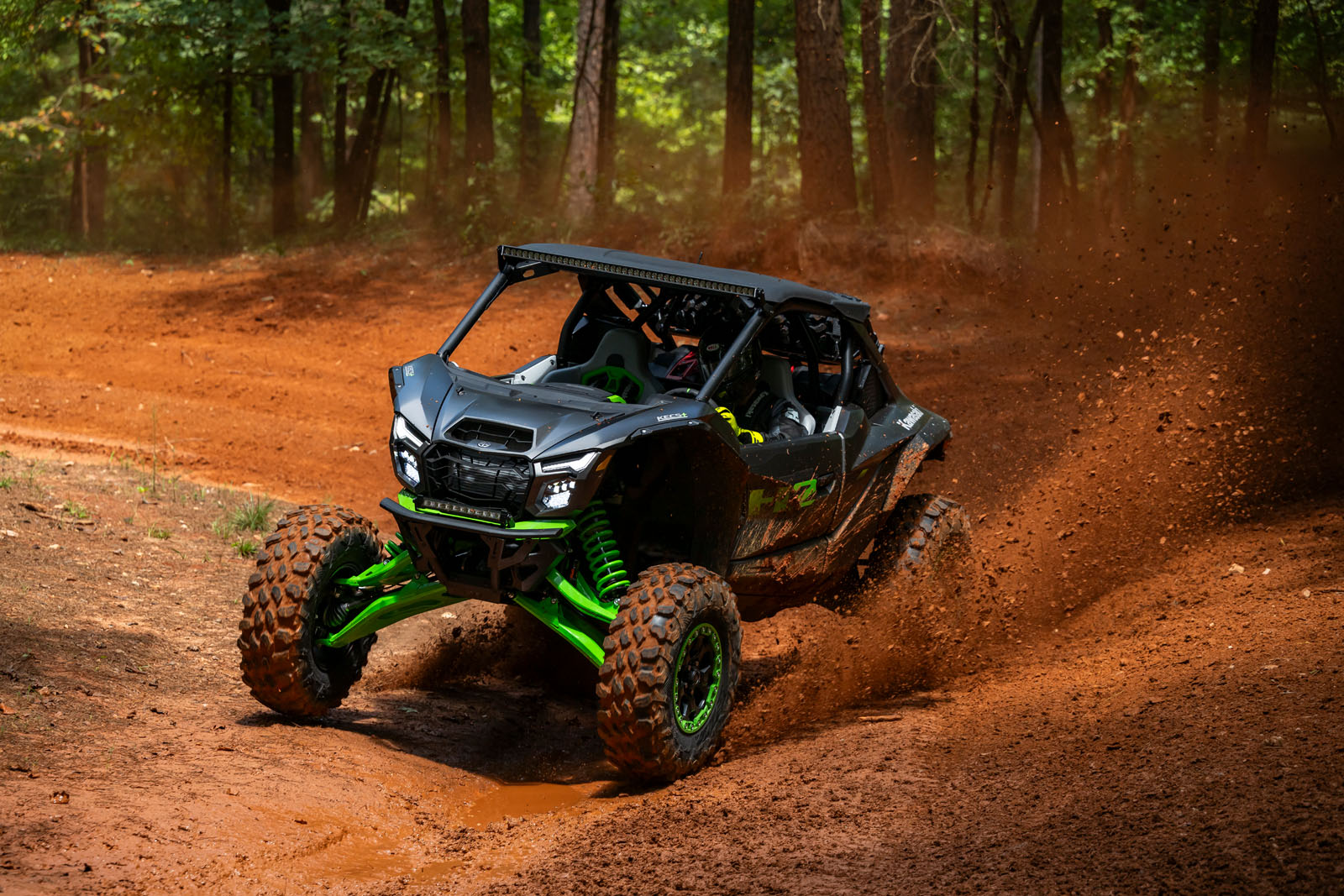
The agile H2 puts its power down with predictable grip, steers best in 4WD, and stays rock solid through corners, off-cambers, and side hills.v
Kawasaki wisely brought us to tighter terrain than Polaris and Can-Am have to test out their top-of-the-line machines, as it appears that their slightly smaller footprint does offer an enhanced level of performance as turns, terrain and trees encroach.
During our testing we never ran out of ground clearance. However, for extremely rocky or rutted terrain, Teixeira Tech already offers higher-clearance 4130 chromoly A-arms, boxed radius rods, and other suspension components for the Kawasaki Teryx H2. These parts were race-tested and proven tough by Kawasaki racer Stone Cold Steve Austin. Learn more or order yours now at TeixeiraTech.com.
Kawasaki did a remarkable job of creating a chassis and suspension package capable of keeping up with the supercharged engine. The biggest risk is letting it lure you into believing you’re a better driver than you are. The H2 will take good care of you if you take good care of it.
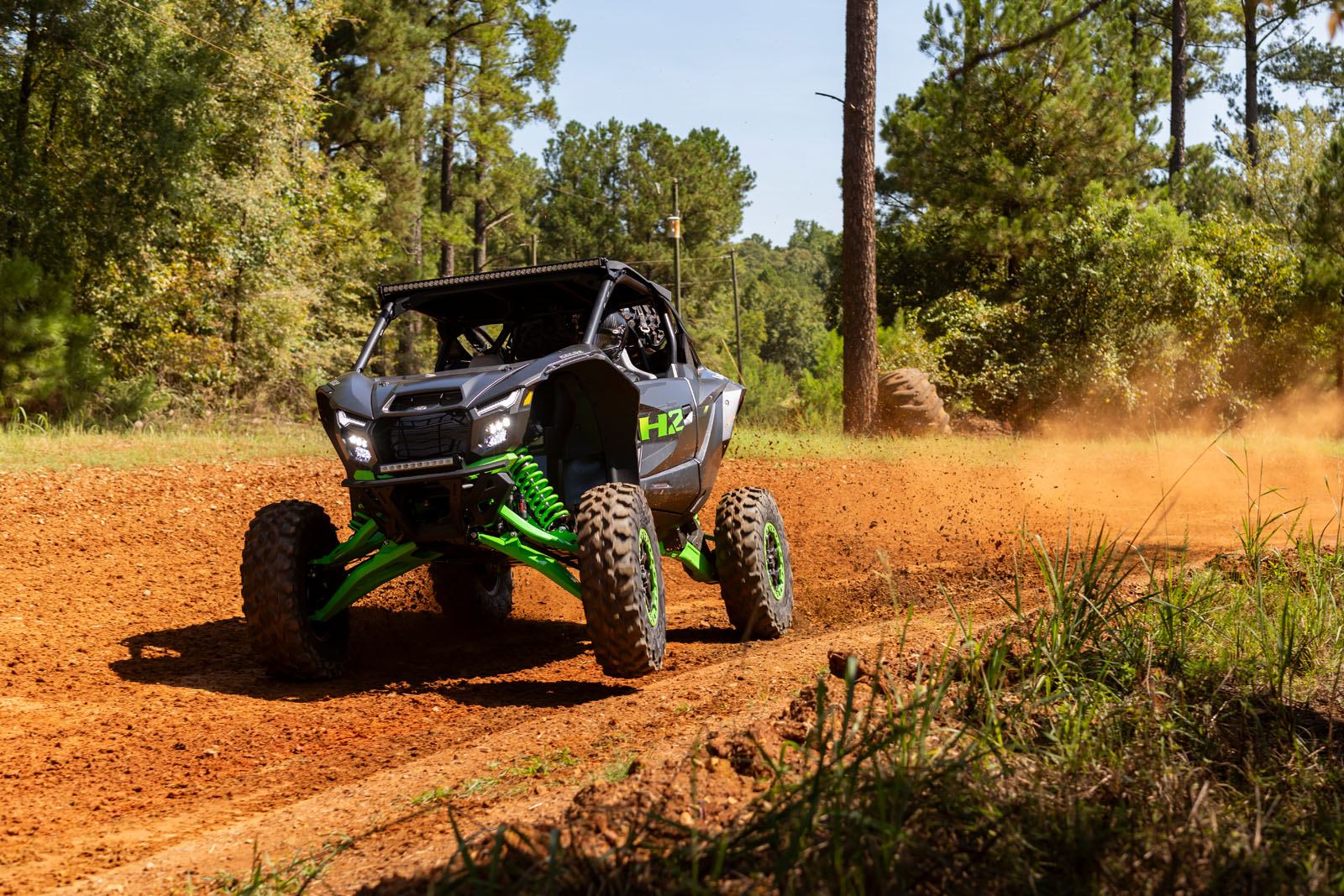
With its compact 101-inch wheelbase, long-travel suspension, and electronically controlled FOX Live Valve system, the TERYX H2 has the chassis control to back up its 250-horsepower engine when the pace gets serious.
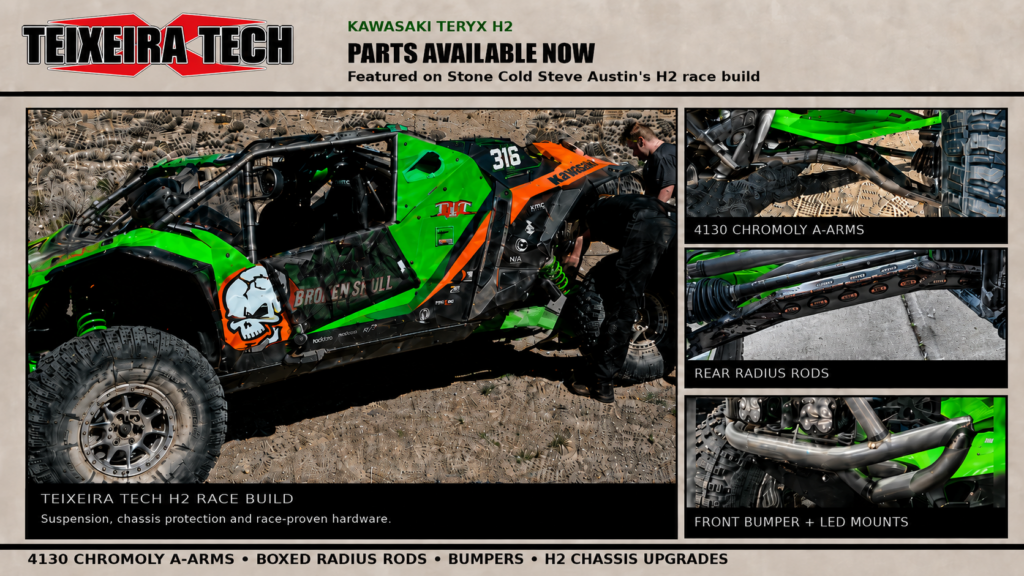
Stone Cold Steve Austin’s Teixeira Tech Kawasaki TERYX H2 race build showcases the company’s 4130 chromoly A-arms, boxed radius rods, front bumper, and other chassis upgrades developed for Kawasaki’s supercharged H2 platform. Click here to learn more.
Brakes
The TERYX H2 LIMITED eS uses 270 mm hydraulic discs front and rear. The front calipers are 3-piston, while the rear calipers are 2-piston. Kawasaki designed the system so the rear brakes engage first, followed by the fronts, for a smooth, linear feel. The parking brake operates on the rear brakes only.
Power and feel are both strong. Modulation is precise, letting you maintain traction or lock all four up on demand with minimal effort. We didn’t push them long or hard enough to create fade, but they felt right in line with the rest of the car’s high-performance character.

The TERYX H2’s brakes deliver strong stopping power with precise modulation, making it easy to control traction or lock all four tires when needed without requiring much pedal effort.
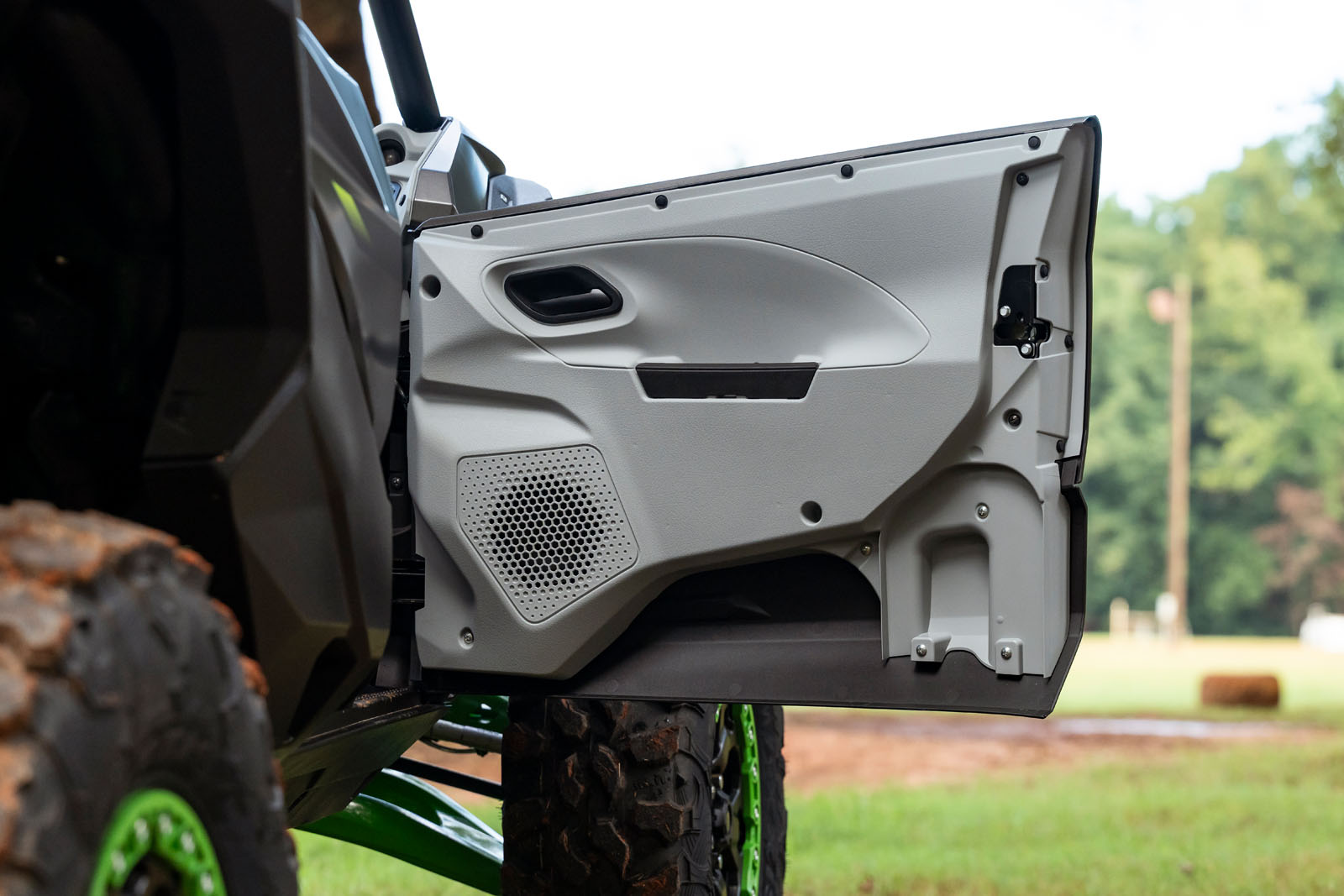
The H2’s full doors feel solid and well finished inside and out, with easy-to-reach handles on both sides that make getting in and out straightforward.
Interior and Other Details
There’s plenty of room for entering and exiting the H2. The doors feel high quality inside and out, with door levers found on both the inside and outside for easy opening.
The seats are well bolstered. The seat back angle was well balanced for sporty driving, comfort, and visibility, and the seats have pass-throughs for the four-point harnesses. The size and padding of the steering wheel are good, with its D-shape making getting in and out easier. Slider adjustable seats and the tilt adjustable steering wheel should allow riders from 5’5” up to 6’2” to enjoy good visibility and leg room.
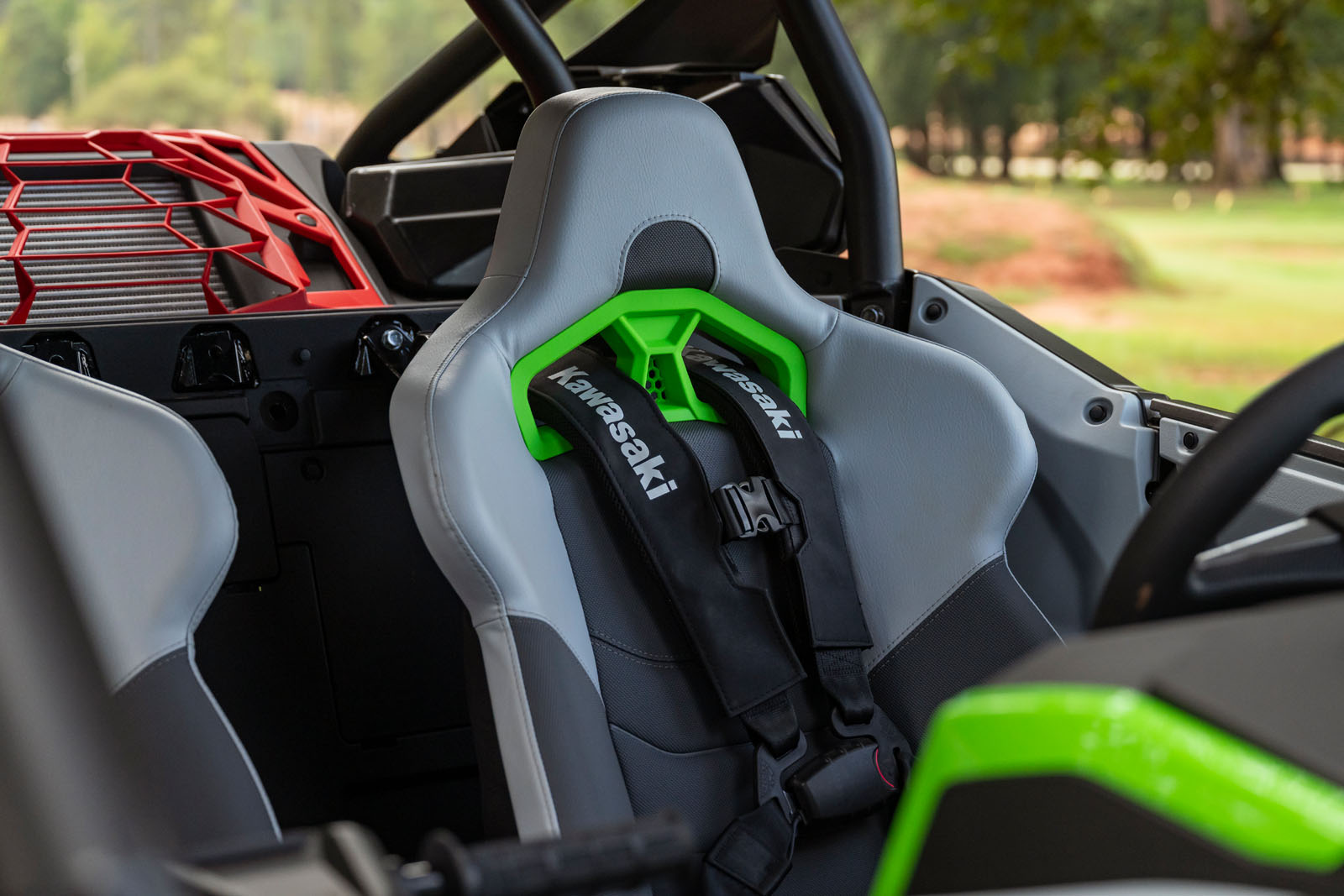
The H2’s well-bolstered seats strike a good balance between support, comfort, and visibility, while slider adjustment and a tilt steering wheel help accommodate a range of driver sizes.
The LIMITED eS is equipped with a 7-inch full-color TFT instrument display that’s bright and easy to read. The steering wheel controls let you switch suspension modes on the fly without taking your hands off the wheel. The passenger gets a wide, adjustable T-handle grip that feels solid and easy to reach.
There are four cup holders total. A lidded compartment in the dashboard above the center console houses two USB-C ports, while the passenger-side glovebox includes a built-in DC socket. In-cab storage compartments are pretty middle of the road, until you look at the massive amount of storage available behind the seats. Overall, the design, feel, and function of all the touch points in the interior are well refined for a high-performance SXS.
Sight line out of the front of the car is good, but without a rear view mirror or backup camera, seeing behind the car is difficult. The 10-inch Garmin Tread off-road navigation system with integrated audio has stereo controls on the touchscreen and the steering wheel. The LIMITED eS also has two 6.5-inch door speakers, 2-inch tweeters mounted in the dash, and is pre-wired for a subwoofer.
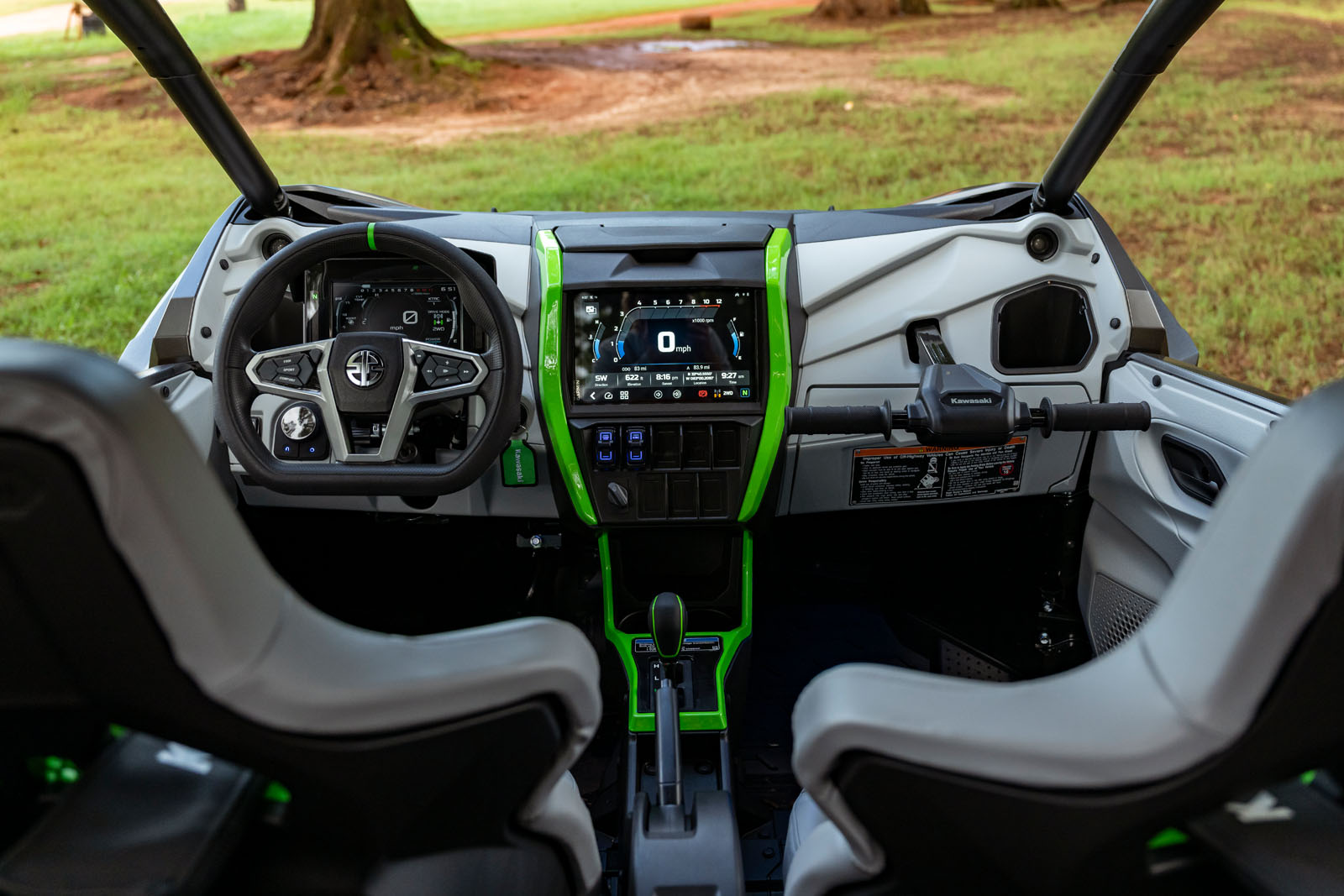
From behind the seats, the TERYX H2 LIMITED eS cockpit shows how much information and control Kawasaki packs into the cabin, with a 7-inch TFT display, 10-inch Garmin Tread navigation and audio system, steering-wheel controls, suspension-mode switches, drivetrain controls, and a wide passenger grab handle all within easy reach. The layout feels well organized and refined for a high-performance SxS.
The LIMITED eS has LED interior lighting. All-LED headlights and taillights include compact headlights with aggressive LED accents up front. We didn’t drive at night, but the lighting should be sufficient for casual night riding.
If you close your eyes and feel the machine, it feels like a modern sports car — but with a roomier, more practical cabin around you and overnight space behind the seats.
Conclusion
Since the 2008 model year, consumers have longed for a sport SXS offering Japanese build quality along with performance worthy of mention among the best performing machines on the market. Finally, that demand has been met with the Kawasaki Teryx H2.
While certainly not a price point machine, it manages to deliver Japanese engineering with U.S. based manufacturing at a price that’s thousands of dollars less than its rivals from Polaris and Can-Am.
The wait is finally over. Kawasaki just put a Japanese supercar on the starting line with the best in the world.

Since 2008, consumers have been waiting for a sport SxS that combines Japanese engineering and build quality with performance worthy of the best machines in the class. The wait is finally over. Kawasaki has put a Japanese supercar on the starting line with the best in the world.
2027 Kawasaki TERYX H2: High-Performance Two-Seat SxS Specification Comparison
| Specification | Kawasaki TERYX H2 LIMITED eS | Can-Am Maverick R X RS w/ Smart-Shox | Polaris RZR Pro R Boost Ultra |
|---|---|---|---|
| Make | Kawasaki | Can-Am | Polaris |
| Model | TERYX H2 | Maverick R | RZR Pro R Boost |
| Trim | LIMITED eS | X RS w/ Smart-Shox | Ultra |
| MSRP | $41,399 | $45,899 as configured* | $52,999 |
| Engine | 999cc supercharged inline-4 | 999cc turbocharged triple-cylinder | 1,997cc turbocharged inline-4 |
| Horsepower | 250 hp @ 9,000 rpm | 240 hp | 275 hp @ 7,000 rpm |
| Torque | 146.3 lb-ft @ 8,800 rpm | Not stated in approved OEM materials | 215 lb-ft @ 4,000 rpm |
| Estimated Dry Weight | 2,165.3 lb | 2,396 lb | 2,553 lb |
| Calculated Power-to-Weight | 0.1155 hp/lb | 0.1002 hp/lb | 0.1077 hp/lb |
| Transmission | CVT, H/L/N/R | Rotax 7-speed DCT with High & Extra Low range | Automatic PVT, P/R/N/L/H |
| Drive System | Selectable 2WD/4WD with locking front differential | Smart-Lok; True 2WD / 4WD with front diff lock / 4WD TRAIL ACTIV / 4WD TRAIL | Race Performance true 2WD / 4WD / 4WD Lock |
| Overall Length | 134.1 in | 142.0 in | 136.5 in |
| Overall Width | 74.0 in | 78.1 in | 74.0 in |
| Overall Height | 73.4 in / 78.3 in with antenna | 71.5 in | 76.4 in |
| Wheelbase | 101.0 in | 110.0 in | 104.5 in |
| Ground Clearance | 16.1 in | 17.0 in | 16.0 in |
| Front Wheel Travel | 23.2 in | 25.0 in | 22.25 in |
| Rear Wheel Travel | 24.0 in | 25.5 in | 24.5 in |
| Front Suspension | Double wishbone | Forged-aluminum HD tall-knuckle double A-arm with sway bar | Stamped & welded boxed dual A-arms with 3-piece stabilizer bar |
| Rear Suspension | 4-link trailing arm | 4-link trailing arm with forged-aluminum HD tall knuckle | Boxed trailing arm with toe link, high-clearance radius rods, 3-piece stabilizer bar |
| Front Shocks | FOX 3.0 Live Valve Internal Bypass | FOX 2.5 PODIUM Piggyback with bypass and Smart-Shox Live Valve Gen 3 | FOX 3.0 Live Valve X2 internal bypass |
| Rear Shocks | FOX 3.0 Live Valve Internal Bypass | FOX 3.0 PODIUM Piggyback with bypass and Smart-Shox Live Valve Gen 3 | FOX 3.0 Live Valve X2 internal bypass |
| Electronic Suspension | KECS+ | Smart-Shox Live Valve Gen 3 | DYNAMIX DVS |
| Electronic Sway-Bar Control | FOX Live Valve Sway Bar Disconnect | Mechanical front sway bar | DYNAMIX DVS active stabilizer-bar links |
| Front / Rear Tires | 33 x 10.00R16 Maxxis Carnivore Plus | 32 x 10 x 16 ITP XNR Tenacity | 32x10R15 BFGoodrich Mud-Terrain T/A KM3 |
| Wheels | 16-in aluminum beadlock | 16-in aluminum flow-formed beadlock | 15-in cast-aluminum beadlock |
| Front Brakes | 270mm discs, 3-piston calipers | 265mm discs, triple-piston calipers | Hydraulic discs, triple-bore calipers |
| Rear Brakes | 270mm discs, 2-piston calipers | 255mm discs, twin-piston calipers | Hydraulic discs, dual-bore calipers |
| Fuel Capacity | 14.8 gal | 13.2 gal | 14.7 gal |
| Cargo Capacity | 300-lb cargo-bed capacity | 200-lb rack capacity | 150-lb box capacity |
| Payload Capacity | 732 lb | Not stated in approved OEM materials | 740 lb |
| Turning Radius | 21.3 ft | Not stated in approved OEM materials | 20.1 ft |
| Seat Belts / Harnesses | 4-point seatbelts | 4-point harnesses with shoulder pads | Retractable 6-point harnesses |
| Primary Displays | 7-in TFT + 10-in Garmin Tread | 4.5-in display + 10.25-in touchscreen | 4-in driver display + 10.4-in RIDE COMMAND touchscreen |
| Cameras | Accessory front/rear camera compatible | Front and rear cameras | Digital rear camera |
| Roof | Plastic roof | Full hard roof | Color-matched aluminum roof with air scoop |
| Seating Capacity | 2 | 2 | 2 |

Related Posts
2026 Can-Am Maverick X3 X DS Turbo RR with Smart-Shox Test Review →